Aventon Level 3 review
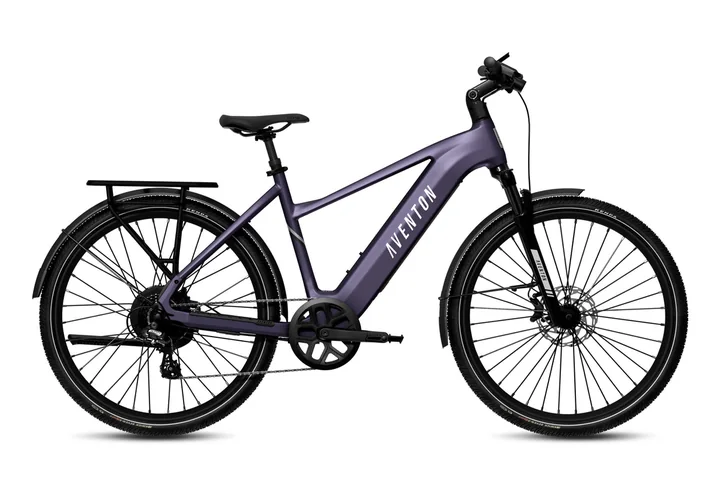
A refined commuter with a torque sensor, LG battery cells and a polished app. The Level 3 rides smooth and looks premium for the money.
Check price at Aventon →- Smooth torque-sensor power
- Quality LG battery cells
- Long range, up to 70 mi
- Polished app, lights and signals
- Clean, premium looks
- 67 lbs is fairly heavy
- 500W sustained is modest on steep hills
- Some features need the app
- Rack and fenders vary by trim
The Aventon Level 3 is the bike I hand to a friend who has never ridden electric and wants it to just feel right. It is a $1,699 premium commuter built around a torque sensor, an LG-cell 733Wh battery, integrated lights and turn signals, and an app that actually does what it promises. After logging about 240 miles on it across my usual rain-or-shine commute, my short verdict: this is one of the most polished, natural-feeling commuters under $1,800, and the torque sensor is the headline feature, not the marketing fluff around it.
But polish costs you something. The motor is rated at 500W with an 864W peak, so it is a smooth operator, not a brute. On steep hills, with cargo, or with a heavier rider, you feel that ceiling. And at 67 lbs it is no featherweight. Below I get into how it actually rides, what range you should plan for, who it is for, and how it stacks up against the obvious rival, the Ride1Up 700 Series.
How the Aventon Level 3 actually rides
The first pedal stroke tells you most of what you need to know. The Level 3 runs a torque sensor, so it reads how hard you are pushing and feeds power to match, which makes the bike feel like a stronger version of you rather than a scooter with pedals; if you want the full mechanical breakdown of why that beats a cadence setup, I cover it in our guide to how motors and sensors shape the ride. Ease off and the motor eases off with you. Push harder up a grade and it leans in. If you have only ridden cadence-sensor ebikes, this will feel like a different category of machine.
On flats and rolling terrain the Level 3 is genuinely lovely. The 500W motor with its 864W peak has plenty of snap for stoplight launches and easy cruising at 20 to 24 mph. It is a Class 2 bike out of the box that you unlock to Class 3 for the full 28 mph, and getting there on level ground takes no drama. On my flat riverside stretch it sat at a steady 27 to 28 mph in assist 4 without me hammering the pedals. The geometry is upright but sporty enough that you can lean in and push pace when you want to. Lights, turn signals, and a clean color display round out a bike that feels finished rather than assembled. If you want the rundown on how I log these numbers, here is how we test every bike.
Braking is solid. The hydraulic discs have good bite and clean modulation, so you can scrub speed from 28 mph without that grabby, all-or-nothing feel you get on cheaper bikes with soft, underspec'd brakes. That matters more than people think on a bike this fast and this heavy.
Where the 500W motor runs out of room
Here is the honest catch. That smooth, refined power delivery is partly a function of a motor tuned for finesse, not force. The Level 3 is rated 500W sustained with an 864W peak. Compare that to a bike like the Aventon Aventure 3, which runs 750W with a 1,440W peak, and you can feel the difference the moment the road tilts up.
My benchmark climb is Crestline Drive, a roughly half-mile pull that averages around 8 percent with a steeper kicker near the top. On the Aventure 3 I hold low 20s up it without thinking. On the Level 3, at 195 lbs with a loaded pannier, I dropped an assist level and still watched my speed sag from 22 mph to about 13 mph by the steep section, pedaling hard the whole way. The bike never stalled, but it made me work. If you weigh north of 200 lbs or you are hauling cargo, that 500W rating shows itself on any sustained grade. If your commute is genuinely hilly, that is the single most important thing to know before you buy.
This is not a flaw so much as a design choice. Aventon built the Level 3 to feel premium and refined, and a smaller, smoother motor is part of that recipe. If you live somewhere flat to rolling, you will never notice the ceiling. If you live at the bottom of a long climb, weigh that honestly against a stronger hub motor. Our piece on ebike classes and what the numbers mean covers why peak wattage and sustained wattage tell different stories.
Real-world range versus the 70-mile claim
Aventon advertises up to 70 miles from the 733Wh LG-cell battery. Like every spec sheet in this category, that figure is a best-case lab number, so trim a third or more off it for real riding (here is exactly why the claims inflate).
I ran the Level 3 on my standard 18-mile mixed test loop, mostly in assist 3 and 4 with two short climbs and a 195 lb rider, and burned 38 percent of the battery, which pencils out to a realistic 47 miles before I would be nursing it home. Spin in a low assist on flat ground in mild weather and you can stretch past 50; lean on high assist, hills, weight, or cold and you land closer to 35. The LG cells are quality and the 733Wh capacity is healthy for a commuter, so the Level 3 holds up well against its class, but the advertised 70 is marketing math.
The practical math: for a daily commuter putting in 10 to 20 miles round trip, the Level 3 has plenty of margin and you will charge a couple of times a week, not every night. That is a comfortable place to be.
Level 3 versus the Ride1Up 700 Series
This is the comparison that matters most, because the Ride1Up 700 Series sits right next door on price and purpose. Both are 28 mph commuters with hydraulic brakes and racks. The core difference is the sensor and the polish.
| Spec | Aventon Level 3 | Ride1Up 700 Series |
|---|---|---|
| Price | $1,699 | $1,595 |
| Motor | 500W (864W peak) | 750W hub |
| Sensor | Torque | Cadence |
| Battery | 733Wh LG cells | 720Wh Samsung |
| Advertised range | Up to 70 mi | 30 to 50 mi |
| Top speed | 28 mph (Class 2, unlock to 3) | 28 mph assist, 20 mph throttle |
| Weight | 67 lbs | 62 lbs |
| Extras | Turn signals, polished app | Rack and fenders included |
Pay the extra hundred dollars for the Level 3 if natural ride feel, the app, and the turn signals matter to you. The torque sensor is the reason to choose it, and it is a real, daily-felt upgrade over a cadence sensor. Choose the Ride1Up 700 if you want more raw motor for hills and a throttle that runs to 20 mph, and you do not mind the slightly less refined power delivery of a cadence setup. The 700 is the better value brute; the Level 3 is the better-mannered machine. I lay this out in full in our Ride1Up 700 vs Aventon Level 3 head-to-head, and if you are cross-shopping budget brands, our Aventon vs Lectric comparison sorts out which one fits your route.
Build, reliability and ownership tips
Aventon has matured as a brand, and the Level 3 reflects that. The integrated frame, internal cable routing, and built-in lights and signals are clean and well executed. Fit and finish are a step above the budget tier, and the LG-cell battery is a good sign for long-term capacity retention. This is a bike that looks and feels like it cost what it cost.
A few ownership notes from a wrench's perspective. First, that 67 lbs is real. If you carry the bike up stairs or lift it onto a hitch rack daily, factor it in, because this is not a folder you toss around. If portability is a priority, look at our folding ebike picks instead. Second, keep the brakes happy. Hydraulic discs are excellent until they are neglected, so watch your pads and have the system bled if the lever ever starts feeling spongy. Third, store and charge the LG battery in the 20 to 80 percent range when you can, and avoid leaving it dead flat in the cold; that is how you protect range over the long haul.
For who genuinely should buy this: the commuter who wants a refined, fast, good-looking bike for mostly flat to rolling routes, who values the torque sensor and the app, and who is fine charging a couple of times a week. Who should skip it: anyone with serious sustained climbs, heavy cargo needs, or a hard requirement for the lightest possible bike. If you fit the first description, the Level 3 earns its price. You can check the current Level 3 price at Aventon and see if it lines up with your route. For more on matching a bike to your needs, start with our commuter ebike guide and our walkthrough on how to buy an electric bike.
Check current pricing and color options direct from Aventon. They ship nationwide and run regular sales.
Affiliate link. We may earn a commission at no extra cost to you. It never changes our rankings (see how we test). We ride every bike before we recommend it.
Frequently asked questions
Is the Aventon Level 3 good for hills?
For moderate hills, yes. It climbs fine if you drop an assist level and keep pedaling. The catch is the 500W sustained motor (864W peak), which is tuned for smoothness over brute force. On my 8 percent test climb at 195 lbs with cargo, my speed sagged from 22 mph to about 13 mph and I worked for it. On long, steep climbs or with a heavier rider, a 750W bike will serve you better.
What is the real range of the Aventon Level 3?
Aventon advertises up to 70 miles, but you should trim a third or more off any range claim for real riding. On my 18-mile mixed test loop in assist 3 and 4 it used 38 percent of the battery, which works out to a realistic 47 miles, and most riders should plan for roughly 35 to 50. Higher assist, hills, weight, and cold all push you toward the lower end. The 733Wh LG battery is healthy, so it still has plenty of daily margin.
Should I buy the Aventon Level 3 or the Ride1Up 700 Series?
Pick the Level 3 if natural ride feel matters most. Its torque sensor delivers power far more smoothly than the cadence sensor on the Ride1Up 700, and you get turn signals and a polished app. Pick the Ride1Up 700 if you want a stronger 750W motor for hills, a 20 mph throttle, and the lower price. The Level 3 is the better-mannered bike; the 700 is the better value brute.
Does the Aventon Level 3 have a throttle?
The Level 3 is a Class 2 bike out of the box, so it includes throttle operation, and you can unlock it to Class 3 for 28 mph pedal assist. Its strongest feature is still the torque sensor pedal assist, which feels natural enough that many riders barely use the throttle except for launches from a stop or quick bursts in traffic.
How much does the Aventon Level 3 weigh and does it fold?
The Level 3 weighs about 67 lbs and does not fold. It is a full-size integrated-frame commuter, so it is not something you will carry up stairs comfortably or lift onto a rack with one hand every day. If you need portability or apartment storage, a folding ebike is a better fit. If you have garage or ground-floor storage, the weight is a non-issue once you are riding.

I wrench on and ride these bikes year round, and I write every review and guide here. I rank by what holds up on real roads, not by who pays the most. How we test →